Japanese Explainer is Live!

Calling all Japanese language learners! Want a free resource that’s low-key and low-commitment?

In 2026 I am ramping up my efforts to offer learning opportunities in some of my favorite teaching areas, in channels where they can reach more people than my humble blog here. As my first initiative, I’ve just launched Japanese Explainer, a FREE Facebook group for Japanese language learners at all levels.

I’ll be personally answering member questions about Japanese once per week, which means you’ll be guiding what I teach. Here’s how it works: members can post their questions throughout the week, and each week I’ll pick one question to do a short explainer on–maybe in video form, maybe in written form, maybe both–which I’ll post to the group on Sunday.

And our very first Q&A answer is now live! Head on over to https://www.facebook.com/groups/japaneseexplainer and check out my answer to a learner’s question about how to remember word order in Japanese.

Spoiler: I give the answer about word order, but I also dive into why word order doesn’t matter for the reasons you think…

Japanese Language Corner: When “But” Doesn’t Really Mean “But”

The Detail Woman here, back with another Japanese learning and translation post.

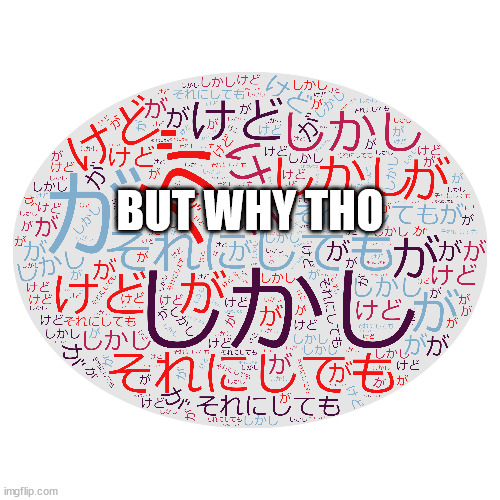
Have you ever felt betrayed by your introduction to Japanese words for “but”?

If so, I get it. が、けど、しかし、and それにしても are all Japanese words that first get taught to us as “but,” and yet they often seem to mean something else in context.

I’d bet that a lot of readers are already familiar with this issue when the “buts” come in the middle of a sentence. However, my Japanese Phrase of the Month for December will be the sentence-beginning それにしても, and that one is pretty tricky if you don’t already have a handle on the “buts” that occur mid-sentence.

So if you’re a beginner, or you’d just like a refresher on mid-sentence “buts,” I’ve got you covered in this post. And if you already know all about these, feel free to skip to the next post! Continue Reading →

Japanese Phrase of the Month 復活!! – November 2023

復活! Japanese Phrase of the Month is back!

Welcome to the relaunch of Japanese Phrase of the Month. Now that I own my own business and have the time, this little corner of the internet will be guaranteed monthly for the first time ever!

This month, we start out with something a little different: a dive into the word “stoic,” and how it behaves differently in English vs. in Japanese.

「ストイック」

Have you been translating it correctly?

Continue Reading →

Japanese Phrase of the Month – June 2021

Welcome to the Japanese Phrase of the Month for June 2021!

Yeah, I know it’s been a few months. I did admit from the beginning that this might not be monthly…

This month, let’s talk Japanese pronouns! And in particular about a common pronoun trap in anime, manga, and video games.

I’ll give a pronoun overview for general readers, and then get into some concrete details about the pronoun trap.


手前てめえ」and Friends

Have you been translating them correctly?

Continue Reading →

Japanese Phrase of the Month – October 2020

I kept meaning to do a “commonly mistranslated phrases” type thing for my crew at Funimation, but then I thought, why not do it in my Copious Spare TimeTM instead, so that I can share it both here and there?

Welcome to my (possibly-not-monthly) Japanese Phrase of the Month!


「何が悲しくて」・「何が悲しゅうて」

Have you been translating it correctly?


You’ve seen this phrase before, but have you dived into its usage?

That 悲しい in there might trick you into thinking the phrase has to do with “sadness,” but you’d be sadly mistaken.

Instead, it’s a “Why me?” phrase. You use it to ask why you have to deal with something you don’t want to deal with, like this:

「何が悲しくてお前と組まなきゃならねえんだ!?」

And some possible translations would be:

Why the hell should I have to pair up with you?!
What did I do to get stuck with you?!
Why do I have to be stuck on a team with you?!
I can’t believe I’m stuck with you for this.

You might be sad about the situation, but there is no sadness in the sentence. ;)

Here’s a great, thorough explanation:

https://detail.chiebukuro.yahoo.co.jp/qa/question_detail/q1181181636

Tune in next month (or whenever) for the next phrase!

Pictures and Sound: Audiovisual Terminology

Tomorrow November 8th, I’ll be presenting my first-ever American Translators Association conference session. If you’ve ever wondered what translating audiovisual content is all about, come join me for session T-10: “Pictures and Sound: Translating Television and Other Audiovisual Media” from 11:30 a.m. – 12:30 p.m.

So that attendees don’t have to give themselves hand cramps scribbling down new vocab or carry around yet another sheet of paper, I want to make a short list of the medium-specific terminology I use here. Please enjoy!

  • Dubbing/ADR吹き替え – Recording over a source for which audio has already been recorded, but is unusable or in another language.
  • Recording – アフレコ – Though the Japanese comes from “after recording,” this is recording voices for the first time to a video source (think cartoons in their original language).
  • Lip flaps (or “flaps” for short) – 口パク – The movements of the characters’ mouths onscreen. This term is mainly for animated video.
  • Subtitles – 字幕 (**Caution: サブタイトル in Japanese often refers to an episode title in a TV series or the secondary title/”sub-title” of a work.)
  • Script/screenplay – 台本/脚本 – We’ll be talking lots more about this in the presentation!
  • Dialogue/lines – 台詞
  • Licensor – English term for the rights holder of the TV or film. Licensors license distribution rights to other companies.
  • Licensee/distributor – The entity to which the licensor grants rights to distribute the film.

I look forward to meeting many of you. And if you translate from Japanese, Korean, or Chinese into any other language, don’t forget to bring your business cards!